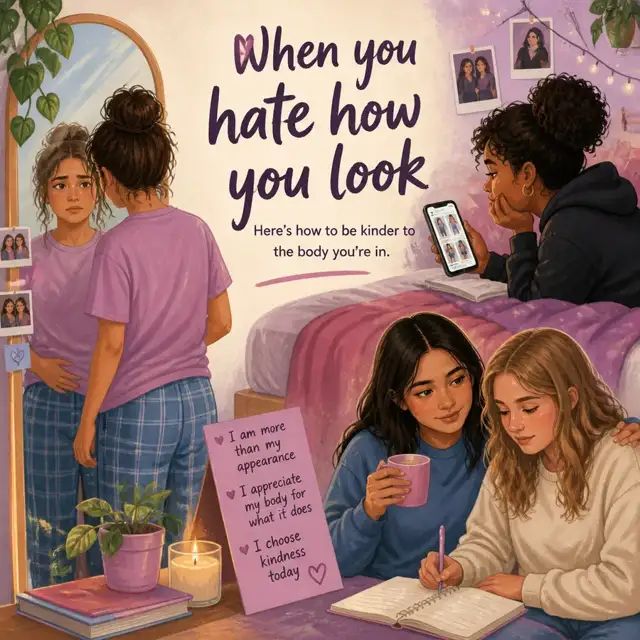
When you hate how you look
Low body image is when how you feel about your body starts to drag down how you feel about yourself as a whole. It might be picking yourself apart in the mirror, avoiding photos, comparing your body to people online, or believing you'd be happier "if only" you looked different. So many teens feel this, and it makes complete sense, you're growing and changing while being shown thousands of filtered, edited images a day. The aim here isn't to suddenly love every inch of yourself, it's to stop your body image running your life.
Sound like you?
When how you feel about your body starts running how you feel about you, that's the bit we work on.
💜The goal isn't loving every inch overnight. It's not letting your reflection boss your whole day.
Curate your feed ruthlessly
Notice which accounts leave you feeling rubbish about yourself and unfollow or mute them, no guilt needed. Fill the space with people who look like real life, plus things that have nothing to do with bodies at all. Your feed shapes your "normal" far more than you realise.
Remember you're comparing your behind-the-scenes to their highlight reel
The images you scroll past are posed, filtered, lit, and often edited, sometimes by professionals. Comparing your normal, unedited body to someone's most flattering, altered photo isn't a fair fight, and it was never meant to be one.
Talk to yourself like you'd talk to your best friend
You'd never tell a friend she's disgusting or worthless because of her thighs or her skin. Notice the cruel voice in your head and ask, "Would I say this to someone I love?" Then try the kinder version. It feels fake at first, and it still rewires the habit over time.
Focus on what your body does, not just how it looks
It lets you laugh until you cry, dance to your favourite song, hug people you love, and carry you through your day. Shifting even a little towards gratitude for what your body does takes some pressure off how it looks.
Dress for the body you have today
Wearing clothes that fit and feel good right now, rather than waiting for a "someday" body, genuinely lifts how you feel. You're allowed to feel comfortable and good in yourself today, not as a reward for changing.
Your body is not a problem to solve before your life is allowed to start. Your life already started.
✨Try this
For one week, do a quick "feed clean up": every time a post makes you feel worse about your body, mute or unfollow it on the spot, and follow one account that makes you laugh or teaches you something instead. By the end of the week, notice whether opening your phone feels even slightly lighter. Tiny changes to what you see daily add up fast.
Why this actually helps
Body image isn't really about your body, it's about the story you've learned to tell about it, and that story is heavily shaped by what you consume and how you speak to yourself. You can't always control the first thought that pops up, but you can change your feed, your inner voice, and where you put your attention. Confidence usually comes from acting kindly towards yourself first, the warmer feelings tend to follow.
Understand it
When how you feel about your body starts running how you feel about you, that's the bit we work on.
You might notice:
- You pick yourself apart in the mirror before you even leave the house.
- You dodge photos, or only post after twelve retakes and a filter.
- You compare your body to edited people online and lose every time.
- You catch yourself thinking you'd be happier 'if only' you looked different.
- Start here if it feels right: Curate your feed ruthlessly.
- Or give this a go: Remember you're comparing your behind-the-scenes to their highlight reel.
In real life
Mirror checking, comparing yourself online, feeling not good enough. Here's how to be kinder to the body you're in.
Things you can actually try:
- Curate your feed ruthlessly: Notice which accounts leave you feeling rubbish about yourself and unfollow or mute them, no guilt needed.
- Remember you're comparing your behind-the-scenes to their highlight reel: The images you scroll past are posed, filtered, lit, and often edited, sometimes by professionals.
- Talk to yourself like you'd talk to your best friend: You'd never tell a friend she's disgusting or worthless because of her thighs or her skin.
- Focus on what your body does, not just how it looks: It lets you laugh until you cry, dance to your favourite song, hug people you love, and carry you through your day.
- Dress for the body you have today: Wearing clothes that fit and feel good right now, rather than waiting for a "someday" body, genuinely lifts how you feel.
- Tell one safe person what is going on, even if you only know how to say, ‘I need some help.’