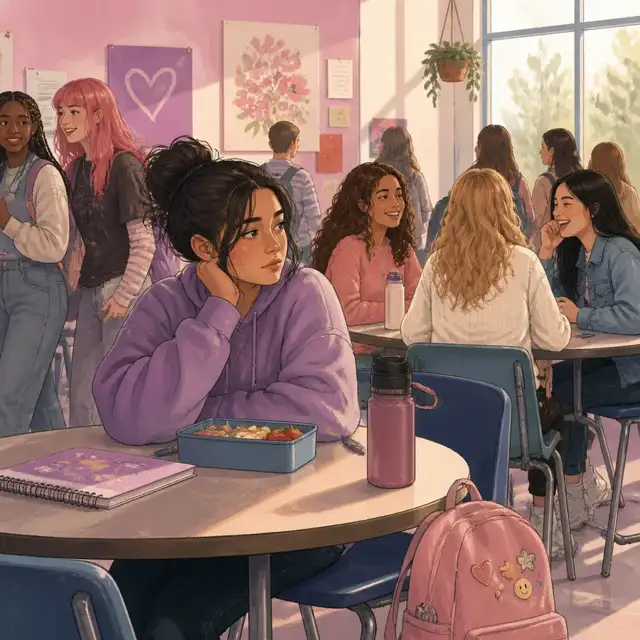
What to do when school feels lonely
Eating lunch alone, not having anyone to sit with, watching everyone else seem to have their group sorted, school loneliness is one of the most common and most painful experiences, and it almost never gets talked about openly. If this is you right now, please know it's far more common than it feels, and it does shift.
Sound like you?
Lunchtime is the loneliest part of the day for so many people, you're far from the only one.
💜None of this is a verdict on you. It's a situation, and situations change.
Find one low pressure place to exist around others
The library, a club, the art room at lunch, anywhere you can be around people without needing to perform friendship straight away. Just being near others regularly often leads to connection more naturally than forcing it.
Look for the other person who also looks like they're alone
There's very likely at least one other person feeling exactly like you do. A small "can I sit here?" can change both of your days, and it's far less scary once you remember you're probably not the only one.
Tell a teacher or school counsellor it's happening
Schools often have more going on than you'd expect, lunchtime clubs, buddy systems, quiet spaces, but you usually have to ask. Telling an adult you trust that lunchtimes feel lonely isn't embarrassing, it's a completely reasonable thing to need help with.
Remember this is a snapshot, not your whole story
Friendship groups at school can feel permanent when you're in the middle of them, but they shift constantly, new terms, new clubs, new classes all bring new chances to connect.
One lonely term is not a verdict on the rest of your life. This is a chapter, not the whole book.
More ways to make lunchtimes easier
Practical things you can try tomorrow, so the hardest parts of the day feel a little more manageable.
Have a "plan" for the hardest moments
Unstructured time, lunch, break, the walk between lessons, is usually when loneliness bites hardest. Decide in advance where you'll go (the library, a club, a quiet bench with a book or your headphones) so you're not standing there deciding in the moment.
Volunteer for things that pair you with people
Helping at an event, joining a committee, being a library or tech monitor, or buddying a younger student gives you a built in reason to talk to others, without the pressure of "making friends" being the whole point.
🧰Your lunchtime tool kit
💬How to tell an adult at school
You don't need it to sound serious or polished. A quick, honest sentence is enough to start.
✨Try this
Pick one lunchtime this week and go to a club or quiet space instead of toughing out the part of the day that hurts most. You're not committing forever, you're just running one small experiment to see if it feels even slightly better. It usually does, and it gets easier each time.
Why this actually helps
Loneliness at school often isn't about whether you're likeable, it's about not yet having found your specific people in this specific environment. Lower pressure, repeated contact, the same club, the same lunch spot, builds connection far more reliably than trying to force your way into an existing group all at once.
Understand it
Lunchtime is the loneliest part of the day for so many people, you're far from the only one.
You might notice:
- You eat in the toilets or library so it's less obvious you're on your own.
- Everyone files out of class in little pairs and you trail behind.
- You scroll your phone at break so you look busy, not friendless.
- Sunday nights come with a heavy feeling because Monday means doing it all again.
- Start here if it feels right: Find one low pressure place to exist around others.
- Or give this a go: Look for the other person who also looks like they're alone.
In real life
Lunch alone? No one to sit with? This is your gentle game plan for making school feel less lonely.
Things you can actually try:
- Find one low pressure place to exist around others: The library, a club, the art room at lunch, anywhere you can be around people without needing to perform friendship straight away.
- Look for the other person who also looks like they're alone: There's very likely at least one other person feeling exactly like you do.
- Tell a teacher or school counsellor it's happening: Schools often have more going on than you'd expect, lunchtime clubs, buddy systems, quiet spaces, but you usually have to ask.
- Remember this is a snapshot, not your whole story: Friendship groups at school can feel permanent when you're in the middle of them, but they shift constantly, new terms, new clubs, new classes all bring new chances to connect.
- Have a "plan" for the hardest moments: Unstructured time, lunch, break, the walk between lessons, is usually when loneliness bites hardest.
- Volunteer for things that pair you with people: Helping at an event, joining a committee, being a library or tech monitor, or buddying a younger student gives you a built in reason to talk to others, without the pressure of "making friends" being the whole point.