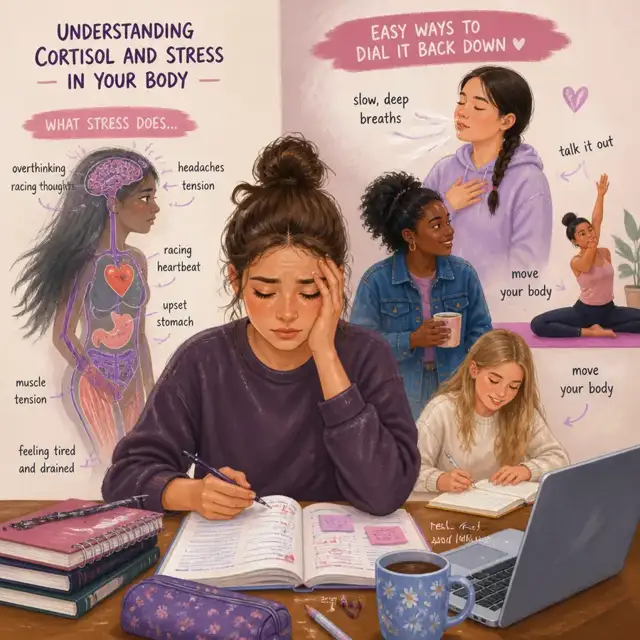
Understanding cortisol and stress in your body
Cortisol is your body's main stress hormone. It's not "bad," it's actually helpful in short bursts, it's what gives you the energy to get through a tough exam or a difficult conversation. The problem is when it stays high for too long, which is common when school, friendships, or home feel stressful day after day.
Sound like you?
When stress never switches off, your body keeps the engine running, and it shows.
💜Your body isn't betraying you. It's overworked, and it can absolutely be calmed back down.
Notice your own stress signals
A racing heart, tight chest, trouble sleeping, snapping at people more easily, these can all be signs your cortisol has been running high for a while, not just "being dramatic" or "overreacting."
Move, even a little
A short walk, some stretching, or dancing around your room for five minutes is one of the more reliable ways to take the edge off stress. You don't need a gym or a sport you're "good at," any movement counts.
Try the tongue release technique
Gently rest your tongue away from the roof of your mouth, relax your jaw, and let your shoulders drop. A lot of us hold tension here without realising, and consciously releasing it can send a calming signal through your body.
Protect your sleep, especially during stressful weeks
Cortisol naturally follows a daily rhythm, and poor sleep throws that rhythm off, which then makes you feel even more stressed the next day. See the Sleep Routine guide above for specific steps.
Stress is your body trying to help. It is allowed to be wrong, and you are allowed to help it calm down.
Bringing stress back down
More everyday ways to lower a stress system that's been running hot, none of them require money or a lot of time.
Get morning daylight
Cortisol follows a rough daily pattern, higher in the morning and lower at night, and daylight early on is one of the things that helps keep that pattern steady. Even looking out of a window or walking part of the way to school is worth it.
Schedule actual downtime, not just scrolling
Endless scrolling keeps your brain mildly alert. Most people find genuinely restful things, music, a bath, time in nature, being with a pet, drawing, leave them calmer than their phone does. Treat rest as a real item on your to do list.
🧰Your stress tool kit
✨Try this when stress spikes
Do a "stress dump": for two minutes, write down everything swirling in your head, no order, no neatness. Then pick the one thing you can actually do something about today, and ignore the rest for now. Getting it out of your head and onto paper tends to make the pile feel smaller and a lot more manageable.
Why this actually matters
When cortisol stays elevated for weeks or months, exams, friendship stress, difficult home life, it can genuinely affect your concentration, mood, sleep, and even your immune system. Understanding this isn't about turning everything into a science lesson, it's about realising that feeling "wired" or exhausted all the time isn't a character flaw, it's a real, physical response your body is having to real stress.
Understand it
Cortisol helps your body respond to stress, and short rises are normal and useful. Long stretches of stress can leave you feeling wired, exhausted and unwell, but cortisol is not a dial you can read off how you feel, and no breathing trick or drink "flushes" it out. If stress has been constant for weeks, that is worth telling a GP rather than managing alone.
You might notice:
- You feel tense and 'switched on' pretty much all the time.
- You're exhausted but somehow can't actually rest.
- Headaches, tummy aches, a clenched jaw, your body's holding it all.
- You crave sugar and snacks the second things feel overwhelming.
- Start here if it feels right: Notice your own stress signals.
- Or give this a go: Move, even a little.
In real life
What stress actually does inside your body, and easy ways to dial it back down.
Things you can actually try:
- Notice your own stress signals: A racing heart, tight chest, trouble sleeping, snapping at people more easily, these can all be signs your cortisol has been running high for a while, not just "being dramatic" or "overreacting."
- Move, even a little: A short walk, some stretching, or dancing around your room for five minutes is one of the more reliable ways to take the edge off stress.
- Try the tongue release technique: Gently rest your tongue away from the roof of your mouth, relax your jaw, and let your shoulders drop.
- Protect your sleep, especially during stressful weeks: Cortisol naturally follows a daily rhythm, and poor sleep throws that rhythm off, which then makes you feel even more stressed the next day.
- Get morning daylight: Cortisol follows a rough daily pattern, and daylight early on is one of the things that helps keep that pattern steady.
- Schedule actual downtime, not just scrolling: Endless scrolling keeps your brain mildly alert.