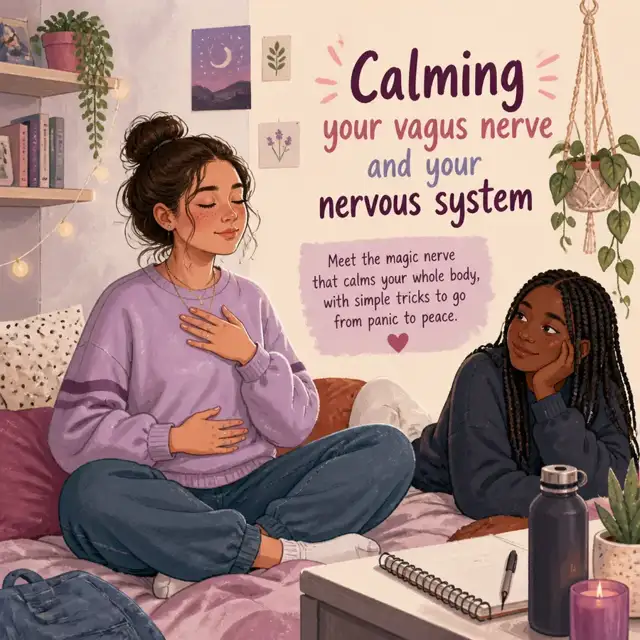
Calming your vagus nerve and your nervous system
The vagus nerve runs from your brain through your chest and gut, and it's a major player in shifting your body out of "fight or flight" and into "safe and calm." When you've been through stress or bullying, this system can get stuck on high alert, which is why your heart races or your stomach drops even when nothing's actually happening right now. These are simple, physical ways to send your body the signal that you're safe.
Sound like you?
When your body's stuck on high alert, it reacts like there's danger even when there isn't.
💜This isn't you being dramatic. It's your nervous system, and you can teach it to feel safe again.
Slow, extended exhales
Breathe in for 4 counts, out for 8. The longer exhale is what tells your nervous system to settle, almost like a built in off switch for panic. Repeat for 1 to 2 minutes, longer if it's helping.
Cold water on your face
Splash cool water on your face, or hold a cold flannel against your cheeks for 30 seconds. This activates a genuine physical reflex that slows your heart rate down, used by some therapists specifically for panic.
Humming or gentle singing
The vibration from humming, singing, or gargling directly stimulates the vagus nerve where it passes near your throat. Try humming a low note for 30 seconds, in the shower, in your room, wherever feels comfortable.
Gentle, grounding touch
Place a hand on your chest or give yourself a slow self hug, arms crossed, hands resting on opposite shoulders. Steady, gentle pressure can help signal safety to your body in a way words sometimes can't.
Name five things you can see
Look around and silently name five things you can see, then four things you can hear, then three things you can touch. This pulls your brain out of "danger mode" and back into the actual room you're in.
Your body is not broken. It just needs a signal that it is safe, and you can learn how to send it.
A few more physical resets
More body based tricks that send the "you're safe" signal. Keep the ones that work for you, everyone's nervous system is a bit different.
The physiological sigh
Take a normal breath in through your nose, then a second small sip of air on top to fully fill your lungs, then a long slow sigh out through your mouth. Two or three of these is one of the fastest known ways to drop a spike of stress.
Shake it out
Animals literally shake off stress, and so can you. Shaking your arms, legs, and whole body for 30 to 60 seconds helps discharge the "fight or flight" energy that gets stuck after a stressful moment.
🧰Your nervous system tool kit
✨Try this 60 second calm sequence
- Two physiological sighs (double inhale, long exhale).
- Hum a low note on each out breath for three breaths.
- Name 5 things you can see, 4 you can hear, 3 you can touch.
- One hand on your chest, one breath: "I'm safe right now, in this room."
Practise it when you're already calm, so it's ready to use when you're not.
Why this actually helps
Your body can't always tell the difference between a real physical threat and a stressful thought or memory, it reacts the same way either time, racing heart, tight chest, that horrible "on edge" feeling. These techniques work because they target your body directly rather than trying to argue with your thoughts first. Once your body calms down, your mind usually follows.
Understand it
When your body's stuck on high alert, it reacts like there's danger even when there isn't.
You might notice:
- Your heart pounds over stuff that 'shouldn't' be a big deal.
- Your stomach drops or churns before school, tests, or seeing certain people.
- You feel wired and on edge even when nothing's actually happening.
- You can't seem to properly relax, like your body forgot how.
- Start here if it feels right: Slow, extended exhales.
- Or give this a go: Cold water on your face.
In real life
Meet the magic nerve that calms your whole body, with simple tricks to go from panic to peace.
Things you can actually try:
- Slow, extended exhales: Breathe in for 4 counts, out for 8.
- Cold water on your face: Splash cool water on your face, or hold a cold flannel against your cheeks for 30 seconds.
- Humming or gentle singing: The vibration from humming, singing, or gargling directly stimulates the vagus nerve where it passes near your throat.
- Gentle, grounding touch: Place a hand on your chest or give yourself a slow self hug, arms crossed, hands resting on opposite shoulders.
- Name five things you can see: Look around and silently name five things you can see, then four things you can hear, then three things you can touch.
- The physiological sigh: Take a normal breath in through your nose, then a second small sip of air on top to fully fill your lungs, then a long slow sigh out through your mouth.